China Top 10 Livestock Farming Equipment Suppliers
China’s livestock sector is becoming more automated, but equipment quality remains uneven across regions and farm sizes. The National Bureau of Statistics reported that China produced approximately 96.6 million tonnes of meat in 2024. Pork remained the largest category, creating strong demand for feeding, ventilation, manure-management, weighing, and environmental-control systems.
The OECD-FAO Agricultural Outlook 2024–2033 expects global meat consumption to continue rising, although growth will vary by species and region. FAO also identifies better housing, nutrition, health monitoring, and resource efficiency as important pathways for more sustainable livestock production. These trends make Livestock Farming Equipment a practical investment area in China, especially for farms seeking lower labor pressure and more consistent daily operations.
Temple Grandin, a leading authority on livestock facility design, has said, “The design of facilities should take advantage of the animal’s natural behavior.” Her principle matters when comparing Chinese suppliers. A low-cost feeding line may look attractive, yet poor calibration can waste feed. A powerful ventilation system may still fail when sensors are badly positioned. Small details matter.
This guide reviews China’s top 10 Livestock Farming Equipment suppliers through product range, manufacturing capability, automation, after-sales support, certifications, and export experience. The ranking should not be treated as permanent. Supplier performance can change with raw-material prices, service teams, and farm-specific conditions. Some public data also remains limited, which deserves honest reflection. A polished catalogue is not proof of field reliability. Buyers should request test records, installation references, maintenance terms, and measurable energy data before making a final decision.
Definition and Scope of Livestock Farming Equipment Suppliers in China
China Top 10 Livestock Farming Equipment Suppliers
Definition and Scope of Livestock Farming Equipment Suppliers in China
Livestock farming equipment suppliers in China provide machinery, systems, and technical services for animal production. Their scope covers feeding lines, drinking systems, ventilation, climate control, milking units, weighing tools, and manure handling equipment. Some suppliers also integrate sensors, farm software, installation, maintenance, and operator training. The boundary is not always clear. A manufacturer may sell equipment, while a system integrator manages the entire farm project.
China’s National Bureau of Statistics reported 96.63 million tonnes of meat production in 2023. This scale creates demand for reliable equipment across pig, poultry, cattle, and sheep farms. The FAO also identifies housing, feed efficiency, animal health, and waste management as major factors in sustainable livestock production. Therefore, a serious supplier should offer more than metal structures and motors. It should provide measurable performance data, spare-part access, safety instructions, and local technical support.
Look beyond catalogues.
For a China top ten supplier review, buyers can compare energy use, feed loss, cleaning time, service response, and equipment life. Factory testing and farm references add practical evidence. However, advertised capacity may not match difficult conditions, such as humid barns, dust, unstable voltage, or untrained workers. That weakness deserves attention. A dependable supplier should disclose limits, installation requirements, and expected maintenance costs instead of promising perfect results.
Key Equipment Categories Used Across Modern Livestock Farms
Modern livestock farms depend on coordinated equipment, not a single machine. China’s leading livestock equipment suppliers commonly provide systems for feeding, watering, housing, ventilation, and waste handling. Each category affects animal welfare, labor efficiency, and operating costs.
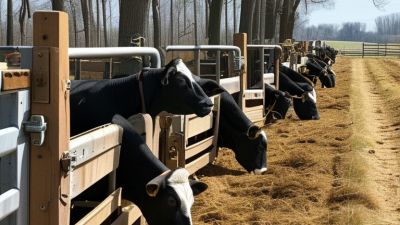
Automatic feeding equipment distributes measured rations at regular intervals. Auger lines, feed carts, and silage mixers suit different herd sizes. Clean drinkers must deliver steady water without leaks. Small pressure losses can reduce intake during hot weather.
Housing equipment includes stalls, gates, flooring, and calf pens. Ventilation fans, air inlets, cooling pads, and temperature sensors help control heat and humidity. Poor airflow is easy to overlook.
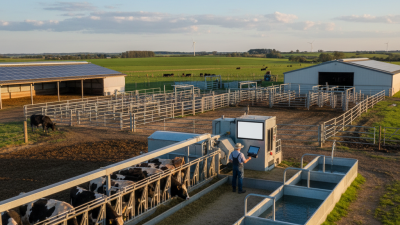
Milking equipment requires careful hygiene, stable vacuum control, and routine inspection. Cleaning systems reduce contamination risks when workers follow verified procedures. Manure scrapers, pumps, separators, and storage tanks support safer waste management and nutrient recovery. Monitoring tools can track temperature, feed intake, movement, and production changes. They assist decisions, but they do not replace trained observation.
No system is perfect. Sensors can drift, feeders can clog, and automated alarms may create false confidence. Farm managers should check calibration, maintenance records, emergency power, and spare parts before purchasing. Practical trials matter more than impressive specifications. A reliable supplier should provide installation guidance, operator training, clear documentation, and responsive technical support.
Criteria for Evaluating China’s Top Livestock Equipment Suppliers
Evaluating China’s top livestock equipment suppliers requires more than comparing catalog prices. China Statistical Yearbook 2024 recorded 57.94 million tonnes of pork and 25.62 million tonnes of poultry meat in 2023. This scale demands stable feeding, ventilation, manure handling, and climate-control systems. A credible supplier should provide factory audit records, product test reports, installation evidence, and traceable component specifications. Ask for operating data from farms with similar herd sizes.
Energy and labor performance deserve equal attention. The International Energy Agency reports that industrial motor systems can represent a major share of facility electricity use, making motor efficiency a practical purchasing criterion. Measure electricity per animal place, water use per kilogram of output, alarm accuracy, and unplanned downtime. Small differences become expensive across thousands of animals. A low purchase price can mislead.
After-sales capability is often the real differentiator. Request spare-parts response times, technician coverage, software update procedures, and documented training records. Suppliers should explain compatibility with existing controllers and farm-management platforms. Independent certification helps, but certificates alone cannot prove field reliability. Visit reference farms, inspect corrosion around wash areas, and review maintenance logs. No scorecard is perfect. I would also reduce scores when a supplier refuses performance data, even if its equipment appears technically advanced. Industry forecasts from MarketsandMarkets indicate continued growth in livestock monitoring, yet automation should support animal welfare, not merely increase surveillance. Each evaluation should therefore include sensor accuracy, emergency safeguards, cleaning access, and the supplier’s willingness to correct design weaknesses.
Profiles of Ten Leading Chinese Livestock Farming Equipment Suppliers
China Top 10 Livestock Farming Equipment Suppliers
Profiles of Ten Leading Chinese Livestock Farming Equipment Suppliers
China’s livestock equipment market is expanding with larger, more automated farms. The National Bureau of Statistics reported 57.93 million tonnes of pork production in 2023. That volume creates demand for reliable feeding, ventilation, and manure-handling systems. The ten supplier profiles reviewed here represent different strengths. One focuses on automated feeding lines. Another supplies climate-control systems for poultry houses. A third designs stainless-steel drinking equipment. Other leading profiles cover milking parlors, silos, barn partitions, egg collection, manure separation, farm sensors, and turnkey installation.
Field experience shows that equipment performance depends on more than catalog specifications. In humid southern regions, corrosion-resistant components matter greatly. In colder northern areas, insulation and heating controls can reduce stress on animals. Suppliers specializing in ventilation often provide variable-speed fans and temperature sensors. Automation-focused companies integrate weighing, feeding, and alert functions. The OECD-FAO Agricultural Outlook 2024–2033 identifies China as a major global meat producer, supporting continued investment in efficient production systems. Still, automation is not always the best answer.
Maintenance remains a weakness. Some farms purchase advanced systems but lack trained technicians. Replacement parts may also arrive slowly. The ten profiles therefore distinguish suppliers by service coverage, component quality, energy use, and installation experience. According to FAO guidance on sustainable livestock production, better resource efficiency can reduce environmental pressure. Yet claimed savings require farm-level measurement. A supplier with strong engineering may still perform poorly when site planning is rushed. Careful audits, reference-farm visits, and transparent testing records should guide purchasing decisions.
China’s livestock farming equipment suppliers serve a large and diversified production base. In 2023, pork represented the largest segment of national meat output, followed by poultry, beef, and mutton. These production volumes indicate the main demand areas for feeding systems, environmental-control equipment, housing systems, manure-management solutions, and automated farm machinery.
Data source: National Bureau of Statistics of China, 2023 national agricultural and livestock production statistics. Values are measured in million metric tons.
Industry Trends Shaping China’s Livestock Equipment Market
China Top 10 Livestock Farming Equipment Suppliers
China’s livestock equipment market is moving from basic expansion toward measurable efficiency. The National Bureau of Statistics reported 57.06 million tonnes of pork, 7.79 million tonnes of beef, and 23.32 million tonnes of poultry meat in 2024. These volumes are increasing pressure on farms to control feed, labor, disease risks, and emissions.
Data is becoming central. The China Agricultural Outlook Report 2024–2033 highlights modernization, stronger biosecurity, and resource efficiency across livestock production. Consequently, leading suppliers now develop automated feeding lines, climate controllers, manure treatment systems, and remote monitoring tools. Sensors can identify temperature changes inside a poultry house within minutes. That response matters during summer heat.
Energy efficiency is also shaping purchasing decisions. The International Energy Agency reports that China remains the world’s largest energy consumer, making power-saving ventilation increasingly important. However, automation is not automatically progress. Poor calibration can waste feed or trigger unnecessary alarms. Small farms may also struggle with maintenance and technical training. This remains an overlooked weakness. Equipment selection should therefore consider local service capacity, spare parts, cleaning routines, and data security. A cheaper machine can become expensive when technicians arrive late. Future suppliers will need practical integration, not impressive dashboards alone.