Choosing an Aluminum Alloy Tanker is a practical engineering decision, not a simple comparison of prices. The right vehicle must match the cargo, route, loading method, and maintenance environment. Aluminum alloy reduces tare weight and can improve payload efficiency. It also resists atmospheric corrosion. However, it still requires careful inspection.
Dr. J. Gilbert Kaufman, a respected aluminum metallurgy expert, wrote, “The properties of aluminum alloys depend on composition, processing, and heat treatment.” That principle matters on every tanker specification sheet. Alloy grade, temper, weld quality, and stress concentration can affect service life. A tank may look flawless outside while fatigue begins near a manway, suspension bracket, or welded seam. Small details matter.
This guide examines capacity, alloy selection, wall thickness, compartment design, and manufacturing quality. It also considers cleaning access, rollover protection, valve placement, and inspection records. A tanker for dry bulk service may require different structural priorities than one designed for liquid food transport. The difference is substantial. So is the risk of choosing by appearance alone.
There is no perfect Aluminum Alloy Tanker. A lighter design may offer better payload but demand stricter loading control. A thicker tank may improve durability but reduce efficiency. Those trade-offs are easy to underestimate. Reliable selection comes from verified specifications, experienced engineering review, and evidence from real operating conditions. Mistakes happen. Good decisions leave room to detect them early.
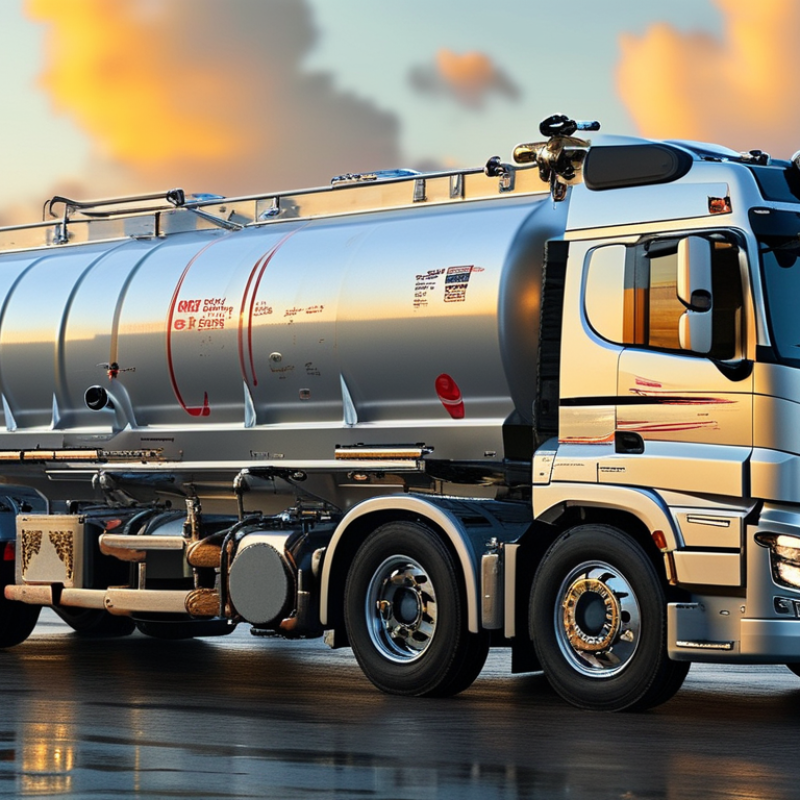
Aluminum alloy tankers are built for weight-sensitive liquid transport. Aluminum has a density of about 2.7 g/cm³, compared with steel at approximately 7.85 g/cm³, according to The Aluminum Association. This lower weight can increase payload capacity and reduce road energy demand. The International Aluminium Institute reported global primary aluminum production at roughly 72 million tonnes in 2024, showing the material’s continuing industrial importance.
Common tanker shells use alloys such as 5083 or 5454. They offer useful strength, weldability, and resistance to atmospheric corrosion. Typical applications include milk, edible oils, water, and other permitted non-hazardous liquids. Internal baffles help control liquid movement during braking and cornering. A practical inspection should examine weld quality, manways, discharge valves, insulation, and cleaning access. Small details matter.
Capacity is not the only decision. A lighter tanker can still fail the wrong duty. Product temperature, density, loading frequency, and cleaning chemicals must match the alloy and design. Pressure and vacuum requirements also need careful verification. Applicable standards differ by country and cargo type, so certification documents should be checked before purchase. I would not treat weight as the whole answer. Field conditions, repair access, and operator training often reveal weaknesses that a specification sheet misses.

Choosing tanker capacity starts with the actual cargo, not the largest available volume. Measure typical load weight, density, loading frequency, and delivery distance. A tank that is too large may carry unused space and increase operating costs. A smaller tank may require extra trips and create scheduling pressure. Payload limits, axle distribution, and road conditions must guide the final capacity.
In field inspections, I have found that internal baffles greatly affect handling. They reduce liquid movement during braking and cornering. Compartmented tanks can separate compatible materials and improve delivery flexibility. However, more compartments also add weight, fittings, and cleaning points. This trade-off is easy to underestimate. The tank shape should support a low center of gravity without reducing access for inspection.
Configuration details deserve equal attention. Select manways, valves, pumps, hoses, and discharge outlets according to daily work routines. Keep controls reachable from a safe standing position. Consider insulation or heating only when the cargo and climate justify it. Aluminum alloy can reduce tare weight, but the structure still needs suitable thickness, weld quality, and corrosion control. Ask for material certificates, pressure-test records, and maintenance guidance. A specification sheet may look complete, yet small omissions can become expensive during service. My own preference is to review real loading patterns before approving the design. Paper assumptions are useful, but they are not always accurate.
Choosing an aluminum tanker starts with the alloy, not a catalogue number. A higher number is not automatically better. Common options include 5083, 5052, 5454, and 6061.
Alloy 5083 offers strong corrosion resistance and reliable weld performance for many tank shells. Alloy 5454 can suit elevated-temperature service, but its benefit depends on the design. Alloy 5052 forms easily and resists corrosion, though it generally offers lower strength. Alloy 6061 is strong in unwelded sections, yet welding can reduce strength near heat-affected zones. That detail is often missed.
Compare yield strength, tensile strength, elongation, and fatigue behavior together. Do not select an alloy from one strength figure. A tanker wall experiences vibration, road impacts, pressure changes, and repeated loading.
Engineers should review shell thickness, compartment layout, baffle spacing, weld size, and reinforcement. A thinner wall may save weight, but it leaves less tolerance for dents and corrosion. More metal is not always safer. Poorly placed stiffeners can create stress concentrations around corners and openings.
When reviewing suppliers, ask for the temper condition, not only the alloy designation. The same alloy can perform differently after forming, welding, and heat treatment.
Check how the proposed grade meets applicable transport requirements in the operating region. A qualified engineer should confirm allowable stress, joint efficiency, and fatigue assumptions.
Even careful calculations can miss fabrication weaknesses. I would inspect a completed tank, because polished drawings cannot show every weld detail, fitting support, or sharp internal corner. Real-world feedback should challenge the calculation, not replace it.
Safety begins with the load, not the tank’s polished surface. Identify density, temperature, vapor pressure, flash point, and corrosiveness before selecting an aluminum alloy. Compatibility charts are useful, but they are not enough. Chlorides, caustic residues, and cleaning chemicals can attack aluminum and weaken welded areas.
The U.S. Department of Transportation’s Large Truck and Bus Crash Facts 2022 reported 5,837 large trucks involved in fatal crashes in the United States. That figure reinforces the need for stronger risk controls. Specify internal baffles, rollover protection, emergency shutoff systems, and documented weld inspections. Ask for material certificates and pressure-test records. Small omissions matter.
Regulatory approval must match the operating route. In the United States, review applicable requirements under 49 CFR Parts 173 and 178. International operations may require ADR, RID, or other regional rules. The tank, fittings, valves, markings, and inspection schedule must satisfy the same framework. A compliant chassis cannot correct an unsuitable tank design.
An aluminum tanker may reduce vehicle weight, yet weight savings should never override compatibility or fatigue resistance.
I would also question vague claims such as “universal chemical service.” They sound convenient, but real service conditions are rarely universal. Have an independent engineer verify the design, especially when the cargo temperature or cleaning process changes.
How to Choose an Aluminum Alloy Tanker?
Inspection, Maintenance, and Total Ownership Considerations
Choosing an aluminum tanker starts with evidence, not polished photos. Request alloy certificates, weld procedures, pressure-test records, and axle-load calculations. A qualified inspector should examine the shell, weld toes, manlids, valves, and rollover protection. Check for dissimilar-metal contact around clamps and frame supports. Corrosion can hide beneath dirt or damaged isolation pads. Small pitting matters. Ultrasonic thickness testing can identify weakened areas that visual checks miss.
A practical maintenance plan should reflect mileage, cargo exposure, and road conditions. Rinse residue after each load, especially around outlets and frame interfaces. Use approved cleaners because harsh chemicals may attack aluminum surfaces. Drain valves completely and inspect seals for swelling, cuts, or leakage. Lubricate moving parts according to service instructions. Record repairs, torque checks, inspection dates, and recurring defects. Records reveal patterns. Maintenance teams sometimes postpone minor repairs, and that decision can become costly.
Total ownership cost includes purchase price, downtime, tires, inspections, repairs, cleaning, and fuel. A lighter tanker may reduce fuel use, but route length and payload determine the actual benefit. Compare warranty coverage, parts availability, technician access, and expected inspection labor. A lower purchase price is not always lower ownership cost. One uncomfortable lesson is that a small weld repair can interrupt operations for days. That risk deserves careful review before purchase.
| Evaluation Dimension | 5052 Aluminum | 5454 Aluminum | 5083 Aluminum | Ownership Relevance |
|---|---|---|---|---|
| Material and Design Characteristics | ||||
| Typical density | Approximately 2.66–2.68 g/cm³ | Approximately 2.66–2.68 g/cm³ | Approximately 2.66–2.68 g/cm³ | All three alloys are substantially lighter than carbon steel, but final tare weight depends on tank geometry, thickness, fittings, insulation, and chassis design. |
| Typical yield-strength range* | About 145–215 MPa, depending on temper and product form | About 145–205 MPa, depending on temper and product form | About 125–240 MPa, depending on temper and product form | The certified temper and welded-condition design values are more important than the alloy name alone. |
| Corrosion resistance | Good general atmospheric and marine resistance; suitable for many non-aggressive liquids | Very good resistance to marine and mildly corrosive environments | Very good resistance to seawater and marine exposure; commonly selected for demanding service | Cargo chemistry, concentration, temperature, cleaning agents, and contamination control must be checked before selection. |
| Weldability | Good; welding locally reduces the original cold-worked temper | Good; suitable welding procedure qualification is required | Good with qualified procedures; commonly used in welded structures | Inspect weld zones carefully because heat-affected areas may govern strength and fatigue performance. |
| Best-fit service profile | General-purpose liquid transport with moderate corrosion demands | Road tankers exposed to frequent moisture, salt, or mildly corrosive cargoes | Higher-strength applications and severe marine or corrosive environments | Select based on cargo compatibility, regulatory class, pressure or vacuum requirements, and fatigue duty cycle. |
| Inspection and Maintenance Program | ||||
| Pre-trip visual inspection | Check shell and head surfaces, welds, manways, valves, hoses, guards, ladders, lighting, grounding points, and signs of leakage or deformation before each trip. | Low-cost inspections reduce the risk of product loss, roadside failure, and unplanned downtime. | ||
| Routine cleaning | Use a documented cleaning procedure with approved chemicals, controlled concentration, suitable temperature, adequate rinsing, and complete drying. | Improper alkaline or acidic cleaning can cause pitting, staining, or accelerated attack even when the alloy has good general corrosion resistance. | ||
| Periodic structural inspection | Examine welds, supports, baffles, mounting points, impact areas, and high-stress details for cracks, distortion, corrosion pits, and fretting. | Inspection frequency is determined by local regulations, service severity, tank category, and the vehicle’s inspection history. | ||
| Non-destructive testing | Use dye penetrant, visual testing, radiographic testing, ultrasonic testing, or other approved methods when cracking, leakage, or weld defects are suspected. | Testing should be performed by qualified personnel using procedures appropriate to aluminum and the applicable tank standard. | ||
| Pressure and leak testing | Conduct only at the specified test pressure and with approved equipment; never exceed the tank’s design pressure or vacuum rating. | Testing intervals and acceptance criteria must follow the governing transport and pressure-vessel requirements. | ||
| Repair control | Repair dents, cracks, damaged welds, and corroded areas through an approved procedure; avoid unqualified welding or uncontrolled grinding. | Poor repairs can reduce fatigue life, alter tank geometry, and invalidate certification. | ||
| Total Cost of Ownership Considerations | ||||
| Initial purchase and fabrication | Usually influenced by plate thickness, welding hours, fittings, and certification more than by alloy price alone | May provide a favorable balance between corrosion resistance and fabrication requirements | Material and qualified welding costs can be higher when higher strength or specialized procedures are required | Compare complete certified-tank quotations, not material cost alone. |
| Payload and fuel efficiency | Aluminum construction can reduce tare weight compared with steel, subject to equivalent capacity, structural design, safety equipment, and legal axle limits. | Quantify expected payload gain and operating mileage using the actual chassis and route profile. | ||
| Maintenance and downtime | Routine washing is simple, but contamination, galvanic contact, weld cracking, and chemical attack require prompt attention. | Track inspection labor, cleaning time, repair frequency, lost operating days, and replacement-part availability. | ||
| Galvanic corrosion control | Separate aluminum from dissimilar metals with suitable isolators, coatings, sealants, and drainage; avoid trapped moisture and conductive deposits. | Correct detailing reduces long-term repair costs around mounts, fasteners, brackets, and chassis interfaces. | ||
| Residual and recycling value | Aluminum is widely recyclable; resale value is affected by certification status, service history, tank condition, alloy identification, and repair records. | Maintain material certificates, inspection reports, repair records, and cleaning documentation to support future resale. | ||
| Recommended selection approach | Choose when cargo compatibility and general-purpose service are confirmed. | Choose when marine exposure and balanced corrosion performance are priorities. | Choose when higher strength or more demanding service conditions justify the additional design and fabrication controls. | Obtain a written compatibility review and verify all design, inspection, and transport requirements before purchase. |
*Typical engineering ranges are indicative only. Actual mechanical properties vary with alloy temper, plate thickness, product form, heat treatment, welding procedure, and governing specification. Inspection intervals, test pressures, cargo compatibility, and acceptance criteria must be confirmed against the applicable local regulations and tank standard.