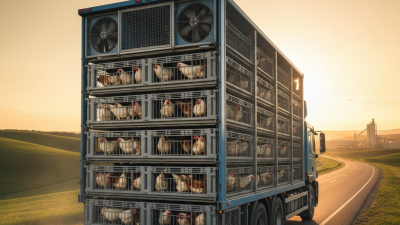
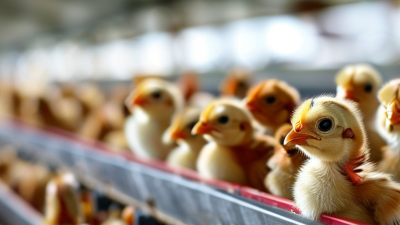
Choosing the best Poultry Chicks Vehicle is not simply a matter of size, price, or appearance. It is a practical decision that affects chick comfort, survival, delivery timing, and farm performance. During transport, newly hatched chicks face changing temperatures, vibration, poor airflow, and handling pressure. A vehicle that looks impressive may still perform badly on a hot afternoon.
Dr. Temple Grandin, a leading animal-handling specialist, has said, “The animal should be at the center of the design.” This principle also applies to chick transport. The vehicle should provide stable temperature control, gentle suspension, cleanable surfaces, reliable ventilation, and enough space for natural movement. Air must circulate evenly, not blast directly onto fragile chicks. Small details matter. A blocked vent can create a hot, stressful corner within minutes.
Experience also shows that specifications alone are not enough. Drivers need clear monitoring systems and practical loading procedures. Farms should examine real delivery routes, seasonal weather, road conditions, and average journey times. A compact vehicle may work well locally but fail during longer trips. That possibility deserves attention.
No vehicle is perfect.
This guide explains how to compare vehicle structure, climate control, hygiene features, capacity, safety equipment, and operating costs. It also considers maintenance, because neglected filters and damaged seals can quietly reduce performance. Some purchasing decisions look economical at first. They may become expensive later. Careful buyers should inspect the vehicle, request operating records, and test its interior conditions before making a final choice. The right Poultry Chicks Vehicle supports consistent care from hatchery to farm, while reducing avoidable stress and transport losses.
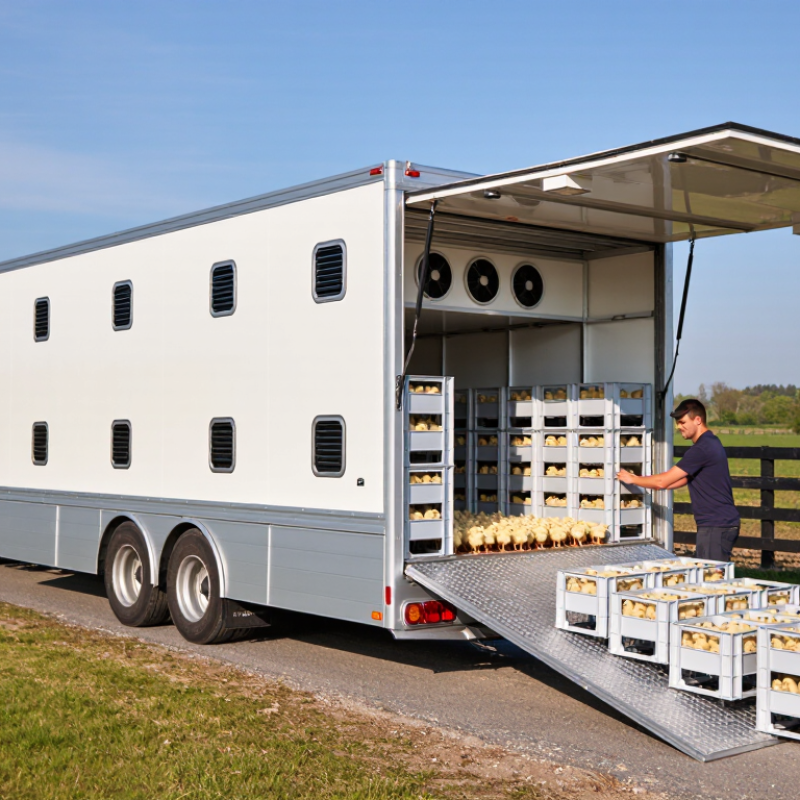
Choosing the best poultry chick transport vehicle starts with defining the journey, not comparing vehicle sizes.
Record the flock size, chick age, loading frequency, route length, and expected travel time. A vehicle for short farm transfers may need different features than one crossing several climate zones. Include loading dock height, road quality, parking space, and cleaning access in your assessment.
Temperature control requires careful planning.
Young chicks are vulnerable to cold drafts, heat buildup, and uneven airflow. Measure conditions at chick level, not only near the vehicle ceiling. In practice, a vehicle may show a normal average temperature while corners remain dangerously warm. Use reliable sensors, ventilation controls, insulated panels, and backup power where practical. Keep equipment easy to inspect between trips.
Humidity, dust, noise, and vibration also affect transport quality.
Smooth flooring should support stable crates without blocking air movement. Doors must open safely and allow quick loading during changing weather. Experienced operators should test the vehicle with a small monitored load before regular use. That trial can expose weak airflow, awkward handling, or cleaning delays.
Small details matter. Very much.
A written inspection checklist improves consistency, but it should not replace judgment. Review local animal welfare requirements, driver training, emergency procedures, and sanitation practices before purchase. Some decisions may remain uncertain, especially when seasonal conditions change. Reassess them after real journeys, recorded temperature data, and feedback from the loading team.
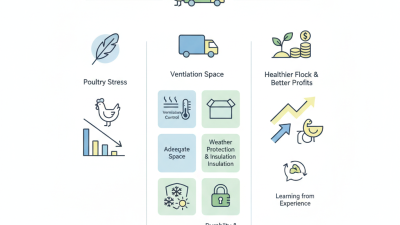
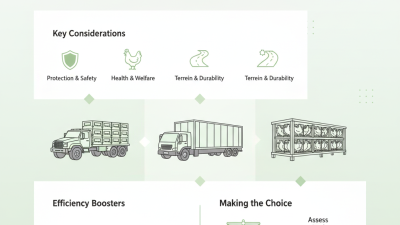
Choosing the best poultry chick transport vehicle starts with the journey, not the vehicle’s appearance. A short hatchery-to-farm route may suit a compact, ventilated van. Longer routes often require a larger vehicle with controlled airflow and temperature monitoring. An enclosed body protects chicks from rain, wind, and direct sunlight. However, it can trap heat if ventilation is poorly designed. Curtain-sided vehicles improve access and airflow, but they need stronger weather protection.
Capacity should match chick numbers, travel time, and seasonal conditions. Overloading reduces air movement and makes inspection difficult. Underusing a large vehicle may increase operating costs without improving welfare. In my field observations, floor space alone gives a misleading figure. Crates need clearance around ventilation openings, and loading density should allow chicks to stand and shift naturally. Leave room for practical handling.
Interior layout matters during loading and unloading. Fixed racks can use vertical space efficiently, while removable modules offer easier cleaning and flexible capacity. Smooth, washable surfaces reduce contamination risks. Rounded edges help prevent injuries. A central aisle allows workers to check crates without climbing over equipment. Keep heavy modules low and secure them against movement. Small details matter. Poor lighting can hide weak or chilled chicks during inspection. I have seen layouts that looked efficient on paper but slowed unloading considerably. Test the vehicle with empty crates before purchase, then review airflow, access, cleaning time, and temperature records after real trips.
Compare typical carrying capacity and interior layouts for day-old chick transport. Actual loading limits depend on chick age, box dimensions, ventilation, climate, journey duration, and local animal-welfare regulations.
Suitable for short regional deliveries. Compact interiors usually use one or two rows of ventilated chick-box stacks, with limited aisle space.
A practical option for regular farm routes. The box body can provide two-sided box loading, a central aisle, and separate air-return clearance.
Designed for longer or more weather-sensitive journeys. Dedicated air distribution and temperature monitoring improve uniformity across the load.
Best for high-volume hatchery distribution. Multiple loading zones and wider circulation paths support efficient loading, unloading, and airflow management.
Capacity figures are typical planning estimates expressed in thousands of day-old chicks, assuming standard ventilated chick boxes and non-overloaded conditions. Confirm the final loading plan using the box supplier’s specifications and applicable welfare rules.
How to Choose the Best Poultry Chick Transport Vehicle?
A suitable chick transport vehicle should protect birds from heat, cold, crowding, and poor air quality. Ventilation is the first feature I inspect. Air must move evenly through every crate, not only near the doors. Adjustable vents help operators respond to changing weather and loading density. Fresh airflow should remove moisture and carbon dioxide without creating harsh drafts.
Temperature control needs steady performance, not impressive display readings. Sensors should measure conditions near the birds, because ceiling temperatures can be misleading. Insulated panels, controlled heating, and safe cooling systems help maintain a stable environment. During inspections, check temperature differences between the front, middle, and rear sections. Small gaps can create cold zones. They are easy to miss.
Bird welfare also depends on crate spacing, smooth flooring, and gentle loading access. Rounded edges reduce feather damage and skin injuries. Non-slip surfaces help chicks remain stable when the vehicle moves. Good lighting can support careful handling, although excessive brightness may increase stress. I would also examine cleaning access and drainage. A vehicle can look advanced but remain difficult to sanitize. That is a practical weakness. Operators should record bird condition, travel duration, temperature, and losses after each journey. These records reveal problems that a sales specification cannot.
| Vehicle Configuration | Typical Use | Ventilation Capability | Temperature Control | Recommended Air Temperature for Day-Old Chicks | Bird Welfare Features | Indicative Capacity | Overall Suitability |
|---|---|---|---|---|---|---|---|
| Open-sided van with transport crates | Short local journeys in mild, stable weather | Natural airflow only; highly dependent on road speed, crate spacing, and weather conditions | No active heating or cooling; limited protection from direct sun, rain, and wind | Approximately 20–24°C, with close monitoring because the vehicle cannot correct temperature changes | Ventilated chick crates, non-slip floors, secure crate stacking, and protection from direct sunlight | Approximately 500–1,500 chicks, depending on vehicle size and crate arrangement | Moderate for short trips |
| Insulated box truck with powered ventilation | Routine hatchery-to-farm delivery over short and medium distances | Mechanical air exchange with adjustable fans; airflow should be distributed evenly across all crate levels | Insulated body with heating and basic cooling support; temperature sensors are recommended in multiple zones | Approximately 20–24°C, adjusted for chick condition, stocking density, and outside temperature | Stable crate loading, low-vibration suspension, rounded internal surfaces, dimmable lighting, and emergency ventilation | Approximately 1,500–5,000 chicks | High for most normal routes |
| Climate-controlled multi-tier chick transport truck | Medium and long-distance transport with high loading volumes | Forced ventilation with monitored airflow, filtered fresh-air intake, exhaust outlets, and separate control zones | Integrated heating, cooling, insulation, digital temperature logging, and alarm functions | Approximately 20–24°C at chick level; avoid sudden temperature changes and localized hot or cold spots | Adjustable crate spacing, balanced load distribution, low-noise equipment, smooth suspension, non-slip floors, and rapid-access doors | Approximately 5,000–20,000 chicks, subject to crate design and legal loading limits | Very high for controlled transport |
| Temperature-controlled trailer with independent crate modules | Large-volume regional distribution and scheduled fleet operations | High-capacity fans, continuous air circulation, airflow monitoring, and backup ventilation capability | Full HVAC system with insulated panels, multiple temperature sensors, data recording, and fault alarms | Approximately 20–24°C at chick level, verified in the front, center, rear, upper, and lower loading zones | Modular loading, reduced handling time, secure partitions, easy sanitation, low vibration, and emergency response access | Approximately 10,000–30,000 chicks, depending on trailer length and crate configuration | Excellent for high-volume routes |
|
Selection guidance: Choose a vehicle with active ventilation, reliable temperature monitoring, insulation, emergency airflow, easy sanitation, and a design that minimizes handling and vibration. Capacity should always be determined by crate dimensions, chick size, ventilation performance, journey duration, weather conditions, and applicable animal-transport regulations rather than by vehicle volume alone.
|
|||||||
Choosing the best poultry chick transport vehicle starts with safety. Check compliance with applicable transport and animal-welfare requirements. Secure doors, reliable latches, and smooth interior surfaces reduce injury risks. Ventilation should provide steady airflow without exposing chicks to harsh drafts. Temperature monitoring is essential during loading, travel, and unloading. Test alarms under realistic conditions, not only in a showroom. Small failures can become serious during traffic delays.
Hygiene design deserves equal attention. Select washable, nonporous panels with sealed joints and rounded corners. These features limit moisture, dirt, and bacterial buildup. Drainage should be practical and easy to inspect. Fresh-air inlets must stay away from exhaust sources. Ask whether cleaning chemicals can damage interior materials. A vehicle may look clean but still hide contamination in hinges or floor gaps. That is easy to miss.
Maintenance needs should be clear before purchase. Inspect access points for fans, sensors, lighting, seals, and temperature controls. Request service records and a realistic maintenance schedule. Check replacement-part availability and calibration procedures. Tire condition and battery performance also affect transport reliability. Do not ignore noise or vibration during a trial run. They may stress chicks or reveal loose components. No checklist is perfect. Review it after every journey.
A low purchase price can hide significant operating expenses. Ask for a complete cost picture before comparing vehicles. Include fuel, insurance, cleaning labor, tire replacement, inspections, repairs, and downtime. A practical test is estimating cost per journey, not only cost per mile. Record three months of fuel use and maintenance data from similar operations. This reveals seasonal fuel changes and loading delays. Short routes still accumulate wear.
Compliance begins with protecting birds throughout loading, travel, and unloading. Check payload limits, compartment dimensions, ventilation, temperature monitoring, lighting, access, and secure doors. Requirements can differ by route and region, so verify current transport rules with a qualified local authority. During inspection, look for smooth surfaces, washable floors, drainage, and protected fittings. Ask for service records, operating manuals, and inspection documents. Do not guess. A missing record can delay a shipment.
Long-term performance depends on construction quality and maintenance access. Choose corrosion-resistant materials and inspect hinges, latches, flooring, fans, wiring, and suspension points. Battery-powered ventilation should have a tested backup system. Schedule preventive maintenance before peak transport periods. In daily operations, small faults become expensive when they affect cleaning or loading speed. I would still reserve money for unexpected repairs; early estimates often look too neat. Review performance after six months. If cleaning takes longer than planned, treat that as useful evidence.