

The Rise of Vertical Farming Transport: Specialized Vehicle Requirements
The Core Challenge: From Climate-Controlled Farm to Climate-Controlled Fork
Vertical farming's value proposition hinges on superior quality, consistency, and a dramatically reduced "field-to-fork" timeline. This creates unique transport imperatives that standard agricultural logistics fail to meet:
Preserving Perfect Post-Harvest Conditions: Crops are harvested at peak ripeness in a perfectly tuned environment (specific temperature, humidity, gas composition). The vehicle must become a mobile extension of this controlled climate, preventing any shelf-life-shocking transitions.
Ultimate Cleanliness and Contamination Control: Grown in sterile, indoor environments without pesticides, these crops have no natural microbial resistance. Transport vehicles must meet near-pharmaceutical-grade cleanroom standards to prevent biological contamination from air, surfaces, or previous loads.
High-Frequency, Small-Batch Urban Delivery: Unlike bulk shipments from rural farms, vertical farms produce smaller, daily batches destined for numerous local endpoints. Vehicles must be agile, parking-friendly, and optimized for frequent stops in dense urban corridors.
Real-Time Traceability and Condition Verification: Consumers and retailers pay a premium for provenance. The vehicle must be a data-generating node, providing immutable proof of perfect conditions throughout the entire last-mile journey.
Engineering the Solution: Key Requirements for Specialized Vehicles
Meeting these challenges requires an integrated approach to vehicle design, marrying advanced engineering with digital intelligence.
1. Precision Micro-Climate Management:
Multi-Zone, Active Atmospheric Control: Beyond simple refrigeration, cabins need independent climatic zones. Delicate herbs, leafy greens, and fruiting crops may require different temperature and humidity set points within the same load. Systems must actively manage not just cooling, but also relative humidity (RH) and ethylene gas scrubbing to delay senescence.
Closed-Loop Air Filtration: HVAC systems must incorporate HEPA or ULPA filters to create positive air pressure inside the cargo area, excluding particulate matter and airborne pathogens from the urban environment.
2. Hygienic Design and Automated Sanitation:
Seamless, Cleanroom-Compliant Interiors: Walls, floors, and ceilings must use non-porous, smooth, and easily cleanable materials like medical-grade polymers or stainless steel, with fully welded, radiused corners to eliminate dirt traps.
Integrated Clean-In-Place (CIP) Systems: To ensure sterility between batches, vehicles should have built-in spray nozzles and drains for automated fogging or misting with food-safe sanitizers, validating a clean slate for every load.
3. Agile and Efficient Platform Design:
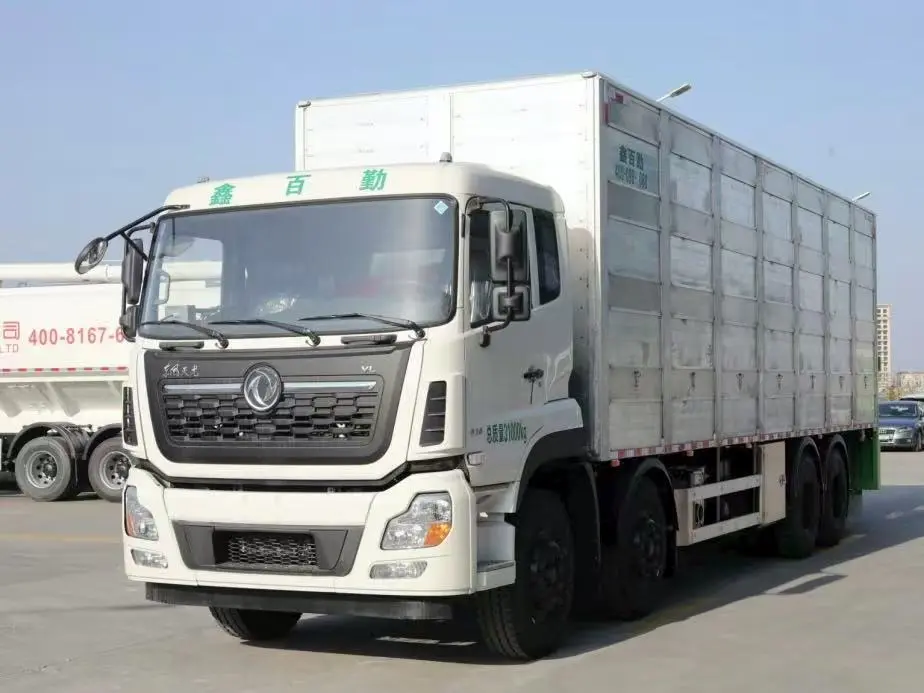
Right-Sized, Electric-Powered Chassis: The ideal vehicle is a medium or light-duty electric vehicle (EV). EVs provide zero-emission operation crucial for urban sustainability goals, reduce noise, and offer superior torque for stop-start delivery cycles. Their modular skateboard platforms also simplify customization.
Modular and Smart Cargo Systems: Interiors utilize standardized, returnable micro-containers (e.g., ISO-compliant totes) that integrate seamlessly with the farm's automated harvesting and packing lines. These containers lock into conditioned shelves within the vehicle, ensuring optimal air circulation around each product unit.
4. Integrated Telematics and IoT Transparency:
Condition Monitoring & Blockchain Logging: A network of IoT sensors continuously streams data on temperature, humidity, shock/vibration, and door seals to the cloud. This data is cryptographically logged, perhaps on a blockchain, to create a tamper-proof certificate of custodial integrity for each batch.
Dynamic Route AI: Routing software integrates not just with traffic, but with real-time inventory systems of retail clients. It can prioritize deliveries based on shelf-life data and store stock levels, dynamically optimizing for minimal waste.
The Broader Impact: Redefining the Supply Chain
The specialization of vertical farm transport vehicles catalyzes a wider systemic shift:
The Demise of the Generic Reefer: It creates a bifurcation in the market: long-haul, bulk refrigeration versus short-haul, precision cold chain.
Data as a Product Differentiator: The verifiable condition log becomes a sellable asset, allowing brands to guarantee "48-Hour Harvest" claims with concrete evidence.
Synergy with Urban EV Infrastructure: It accelerates the business case for urban EV charging networks and micro-distribution hubs (dark stores), further compressing delivery times.
Conclusion: The Vehicle as the Final Growing Chamber
For vertical farming to fulfill its promise of local, resilient, and premium food production, the transportation link cannot be an afterthought. The specialized vehicle is not merely a truck; it is the final, mobile growth chamber and the critical data bridge between farm and customer. Its requirements—precision climate control, sterile hygiene, agile electric platforms, and embedded intelligence—define the next frontier in agri-logistics. As vertical farms rise, so too must the sophistication of the vehicles that carry their harvest, transforming the last mile from a logistical cost center into a competitive advantage and a guaranteed seal of quality.