

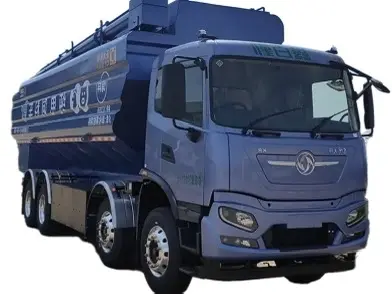
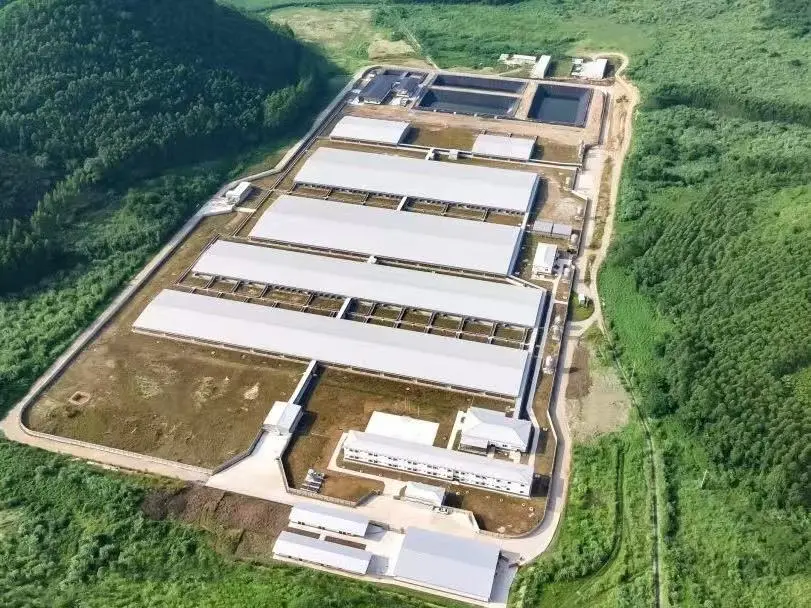
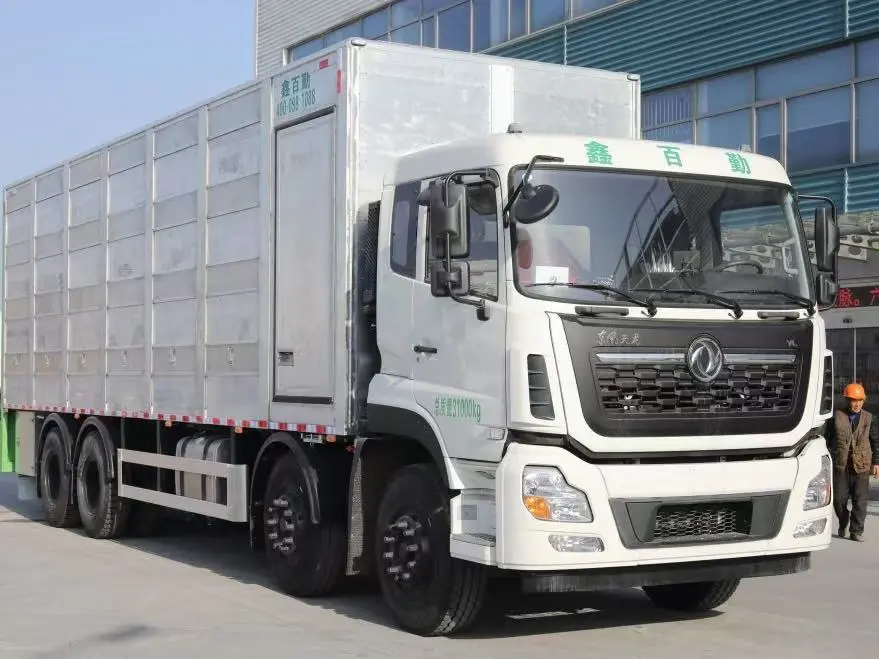
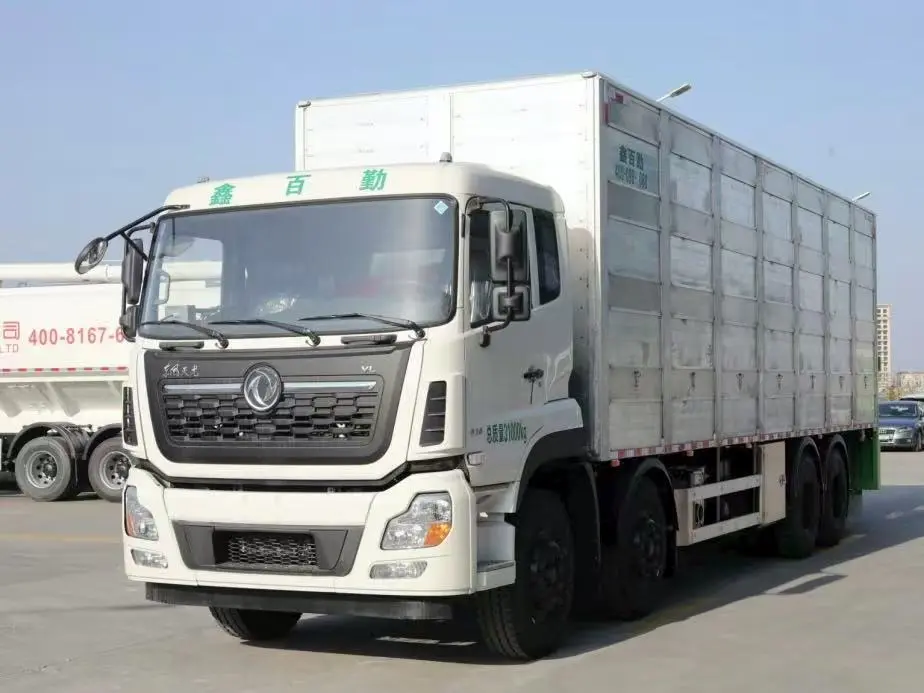
Goldbees Poultry Transport Trucks: Engineering for Zero Contamination
This commitment moves far beyond superficial cleaning protocols. It is a foundational principle that influences every stage, from initial design and material selection to operational technology and driver training. The result is a system engineered to break the chain of disease transmission.
1. Foundational Design: Eliminating Contamination Reservoirs
Traditional truck designs are fraught with contamination traps—seams, cracks, porous surfaces, and complex angles that harbor pathogens even after cleaning. Goldbees’ approach starts with a Hygiene-by-Design framework.
Seamless, Non-Porous Surfaces: The cargo compartments are constructed using smooth, non-porous composite materials or high-grade, coated alloys . This eliminates the microscopic niches where viruses and bacteria can hide. Walls and floors are seamlessly welded or curved, avoiding 90-degree corners where organic matter accumulates.
Advanced Effluent Management: A critical source of cross-contamination is manure and wastewater. Goldbees trucks incorporate a closed-system, automated waste management solution. Perforated floors allow waste to pass through, but unlike traditional systems, it is immediately channeled into sealed, internal containment tanks . This prevents any leakage or spillage onto roadways or farm entrances, a common vector for disease spread.
Dedicated Zone Separation: The design rigorously separates the "clean" driver's cab from the "dirty" animal holding area via a sealed bulkhead. Furthermore, the trucks facilitate a clear division between internal (farm-dedicated) and external (third-party) vehicle flows, a principle shown to drastically reduce cross-contamination risks .
2. Proactive Environmental Control: Creating a Pathogen-Barrier Ecosystem
Simply removing germs is not enough; Goldbees engineers the internal atmosphere to actively prevent their introduction and proliferation.
HEPA-Filtration and Positive Pressure: For their highest-specification models, particularly those transporting high-value breeding stock or day-old chicks, Goldbees integrates High-Efficiency Particulate Air (HEPA) filtration systems . These systems create a positive air pressure inside the cabin . By forcing filtered air out through any small openings, they prevent unfiltered, potentially contaminated external air from entering. This effectively creates a moving "bubble" of clean air around the birds.
Precision Climate Management: Stress induced by heat or cold compromises poultry immune systems, making them more susceptible to disease. Goldbees trucks feature fully automated, thermostatically controlled ventilation and heating/cooling systems . By maintaining a constant, species-specific temperature and humidity range, the trucks not only safeguard welfare but also bolster the birds' natural defenses against pathogens.
3. The Decontamination Cycle: Automated, Validated, and Data-Driven
The post-transport cleaning and disinfection (C&D) process is where the zero-contamination goal is ultimately validated. Goldbees has transformed this from a manual, variable chore into a reliable, automated operation.
Integrated Clean-In-Place (CIP) Systems: The trucks are equipped with built-in, high-pressure sprayer systems with nozzles strategically placed to ensure complete coverage of all internal surfaces . This allows for a thorough initial rinse and application of disinfectant without requiring personnel to enter the compartment, enhancing safety and consistency.
Data-Logging and Verification: Sensors monitor key parameters during the C&D cycle, such as water temperature, chemical concentration, and pressure. This data is logged against pre-defined standards, providing objective, auditable proof that a validated decontamination process was completed successfully. This digital record is crucial for compliance and quality assurance.
4. The Human Factor: Training and Protocol Integration
Technology alone cannot guarantee zero contamination. Goldbees embeds biosecurity into the operational protocol.
Comprehensive Driver Training: Drivers are trained as biosecurity officers. They understand the critical importance of using designated routes, adhering to farm entry protocols, and correctly utilizing all onboard systems.
"All-In, All-Out" Logistics Support: The truck design facilitates the industry-best-practice "all-in, all-out" principle. After delivering a flock and undergoing a complete C&D cycle, the vehicle remains empty until its next assigned task, preventing the mixing of animal groups and breaking disease cycles .
Conclusion: A New Standard for Secure Poultry Logistics
Goldbees Poultry Transport Trucks represent a paradigm shift. They demonstrate that achieving near-zero contamination in livestock transport is an attainable goal through meticulous engineering and systems thinking. By integrating durable, easy-clean materials; active, pathogen-barrier atmospheric controls; automated, verifiable decontamination cycles; and rigorous human-protocol integration, Goldbees offers more than just a vehicle—it provides a comprehensive biosecurity solution.
For poultry producers operating in an era of heightened disease threats and consumer scrutiny, this engineering-first approach is not a luxury but a necessity. It safeguards animal health, protects financial investments, and ultimately contributes to a more resilient and sustainable food supply chain. Goldbees has effectively turned the transport truck from a potential liability into a mobile fortress against disease.