Why You Should Consider Using a Chicken Harvester for Your Farm?
In recent years, the poultry farming industry has seen significant advancements in technology. One breakthrough is the Chicken Harvester, designed to streamline chicken harvesting processes. According to a report by the Poultry Science Association, 70% of farms are investing in automation to improve efficiency. This shift highlights the growing recognition of innovative tools in agriculture.
The Chicken Harvester reduces labor costs and minimizes stress on the birds. By using this technology, farms can enhance productivity while maintaining animal welfare standards. However, trust in new technologies can be a barrier. Some farmers remain skeptical about initial investments versus long-term savings.
Moreover, the consideration of implementing a Chicken Harvester also requires careful evaluation. Farmers must weigh the benefits against their unique operational needs. It is crucial to understand that automation is not a one-size-fits-all solution. Balancing traditional methods with modern solutions may offer the best results.

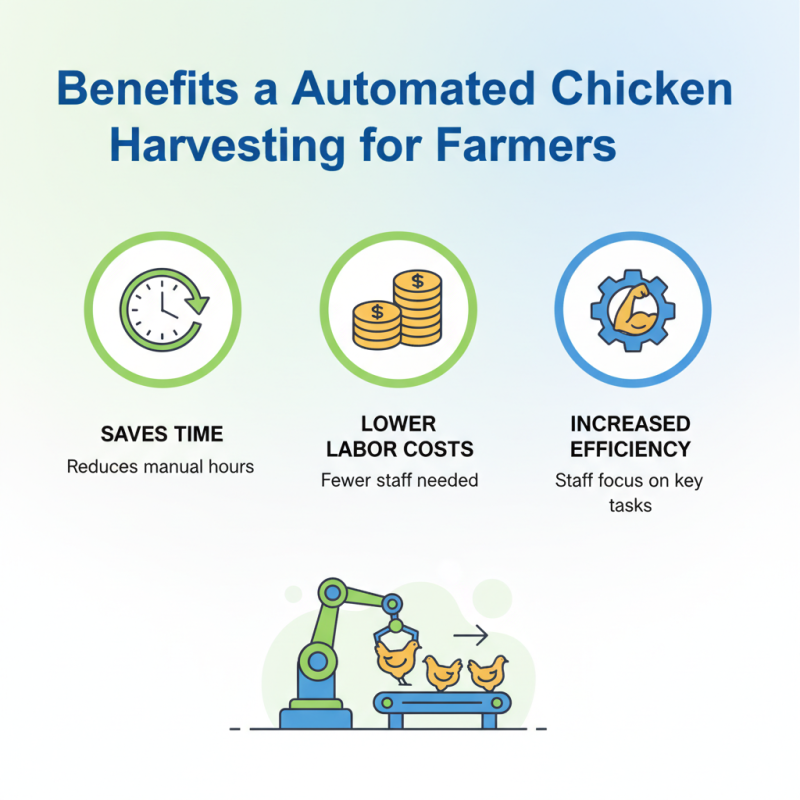
Benefits of Automating Chicken Harvesting for Farmers
Automating the chicken harvesting process offers numerous benefits for farmers. It saves time and labor costs, allowing staff to focus on other essential tasks. Traditional methods require many hands and long hours, which can lead to fatigue and decreased efficiency. A chicken harvester streamlines the process, substantially reducing the manpower needed for this critical operation.
Using a chicken harvester can also improve animal welfare. These machines are designed to handle birds gently, minimizing stress during the harvest. Stress-free birds lead to better meat quality. However, investment in such equipment must be carefully considered. The initial cost can be significant, and farmers should weigh this against potential long-term savings.
Farmers should also think about the learning curve associated with new technology. Adapting to automation may require training and time. Without proper guidance, the transition might not yield the expected results. As with any innovation, the integration of chicken harvesters into farming practices should align with individual operations for maximum benefit.
Key Features of a Chicken Harvester to Look For
When considering a chicken harvester for your farm, it's essential to know the key features that can enhance efficiency.
Look for a model with adjustable speed settings. This flexibility allows you to match harvesting speed with your flock size.
Different breeds and sizes of birds may require varying handling speeds. An adjustable system minimizes stress on the chickens, improving overall welfare.
Durability is another crucial aspect. A robust design can withstand harsh farm conditions.
It should resist wear and tear from frequent use. Also, consider a harvester with easy maintenance features. User-friendly maintenance can save you time and money.
A complex design may lead to frustration and downtime.
Finally, safety features are vital. Look for protective guards, emergency stop buttons,
and ergonomic designs. These elements help ensure the safety of both workers and chickens.
Reflect on how each feature aligns with your farm's needs. A thorough evaluation can lead to optimal productivity and animal welfare.
Consider your unique farming situation to make an informed choice.
How Chicken Harvesters Improve Farm Efficiency and Productivity
Using a chicken harvester can significantly enhance farm efficiency and productivity. Recent studies indicate that automating chicken harvesting can increase productivity by up to 30%. This is vital for farmers to maximize their output while minimizing labor costs. Traditional harvesting methods often result in lower efficiency and prolonged processing times. An automated harvester streamlines these operations, ensuring faster, more consistent results.
Incorporating chicken harvesters also reduces physical strain on workers. Data from agricultural health studies show high injury rates related to manual harvesting. Switching to machinery alleviates much of this risk, allowing farmers to focus on management instead of labor-intensive tasks. However, initial investments can be daunting. Understanding your farm's specific needs can help justify these costs.
Tip: Regular maintenance of your harvester is crucial. This can extend the equipment's lifespan and reduce unexpected downtime.
Another consideration is training. Efficient use of the machinery requires proper training. New technologies can be challenging. Keeping staff well-informed on best practices can enhance the overall productivity of your farm.
Tip: Consider forming small training groups. This promotes knowledge sharing and helps in addressing challenges collaboratively. Balancing technology and workforce needs is essential for long-term success.
Impact of Chicken Harvesters on Farm Efficiency and Productivity
Comparing Traditional Methods with Chicken Harvesters
When comparing traditional chicken harvesting methods to modern chicken harvesters, the differences become clear. Traditional methods often involve manual labor. Farm workers catch chickens by hand, which is time-consuming and labor-intensive. This process can lead to stress for both workers and birds. Injuries can occur due to the chaotic environment. Plus, productivity often suffers as workers tire from repetitive tasks.
On the other hand, chicken harvesters offer a more efficient solution. These machines are designed to minimize stress for the animals. They mechanically catch and transport chickens with precision. This can result in higher overall yields and better meat quality. However, the initial investment for these machines can be a barrier for some farmers. Not every farmer may find the technology reliable, especially in varying conditions. It’s vital to consider farm size and specific needs before making a decision. Balancing efficiency with practicality is essential for sustainable farming.
Cost Considerations and Return on Investment for Chicken Harvesters
Investing in a chicken harvester can significantly impact your farm's bottom line. According to industry research, labor costs typically account for 40% of total production expenses. Automating the harvesting process can reduce these costs by up to 30%. Additionally, the time saved allows farmers to allocate resources to other essential tasks, potentially increasing overall productivity.
When considering a purchase, it's crucial to analyze the return on investment (ROI). A study indicates that farms implementing chicken harvesters saw a 20-25% increase in efficiency within their first year. Despite the initial investment, many farmers recoup costs in less than two years. However, it's essential to evaluate the specific needs of your farm. Some farms may find that a smaller, more manual approach is still efficient.
Tips: Start by analyzing your current harvesting costs. This will help you understand potential savings. Consider the size of your flock and the scale of your operation when choosing equipment. Not all harvesters fit every farm. Always seek advice from agricultural specialists to make an informed decision. Research shows that collaboration with peers can lead to better choices.
Why You Should Consider Using a Chicken Harvester for Your Farm? - Cost Considerations and Return on Investment for Chicken Harvesters
| Dimension |
Details |
| Initial Cost |
$20,000 - $50,000 |
| Annual Maintenance |
$1,500 - $3,000 |
| Labor Savings |
Up to 50% reduction in labor costs |
| Time Savings |
Reduces harvest time by 30-40% |
| Return on Investment (ROI) |
Typically within 2-3 years |
| Increased Yield |
Higher overall production efficiency |