What is a Livestock Semi Trailer and How Does It Work?
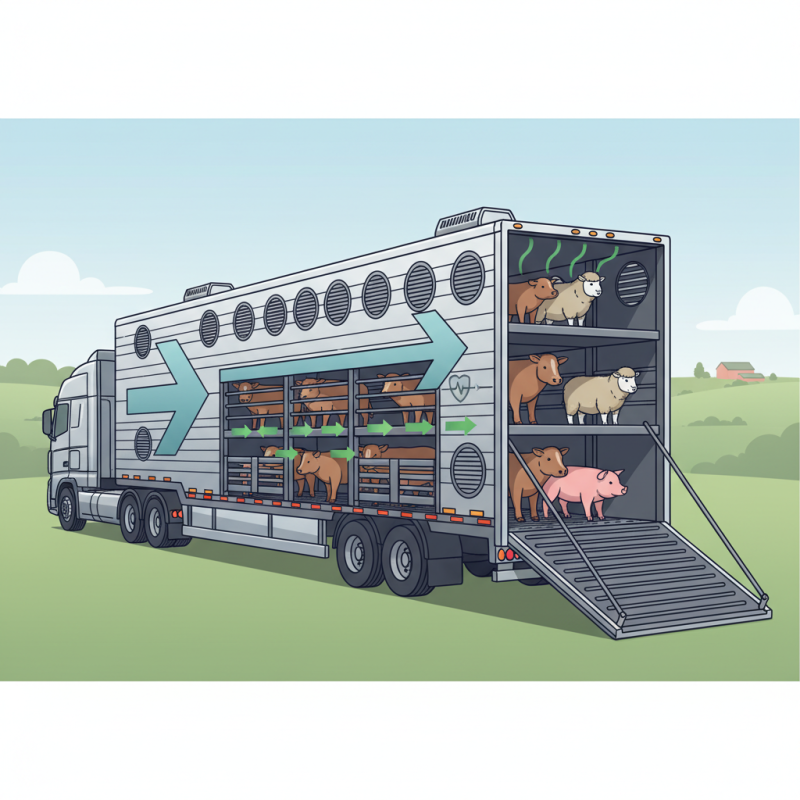
The Livestock Semi Trailer is an essential vehicle for transporting animals. Designed for safety and efficiency, it requires specialized features to protect the animals inside. This type of trailer is equipped with ventilation systems, non-slip floors, and secure loading ramps.
Understanding how a Livestock Semi Trailer works is crucial for farmers and transporters. The design ensures animals are stable and comfortable during transit. Properly loaded, these trailers can minimize stress, reducing the risk of injury. It is vital to follow guidelines when using such equipment.
While Livestock Semi Trailers are effective, they pose challenges. Not all trailers meet the required standards. Some may lack adequate ventilation or space. Reflecting on these aspects helps transporters make better choices, ensuring animal welfare is prioritized during transportation.
What is a Livestock Semi Trailer?
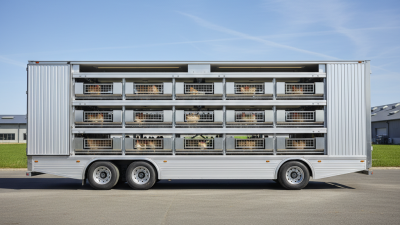
A livestock semi-trailer is a specialized type of trailer designed for transporting animals such as cattle, pigs, and sheep. These trailers are equipped with features that ensure the safety and welfare of the livestock during transit. The design includes ventilation systems, non-slip flooring, and dividers to keep the animals secure. Additionally, many trailers have loading ramps that facilitate the easy and safe entry and exit of animals.
Understanding how a livestock semi-trailer works involves recognizing its role in the agricultural supply chain. It connects farms with markets, ensuring that animals are transported efficiently. A proper distribution of weight is crucial for stability while driving. Drivers must be trained to handle these trailers carefully, as sudden movements can cause distress to the animals inside. Trucking regulations often mandate specific conditions for transporting livestock, highlighting the importance of compliance.
These trailers can be challenging to maintain. Regular checks for wear and tear are necessary to ensure safety. There are instances where improper loading leads to injuries among animals, raising ethical questions about transportation practices. Awareness of these issues is vital for anyone involved in the livestock industry. It underscores the need for continuous improvement in practices related to animal welfare during transport.
Annual Livestock Transportation by Type (in Thousands)
Key Components of a Livestock Semi Trailer
A livestock semi trailer is designed to transport animals safely and efficiently. Several key components of these trailers ensure that animals are provided with adequate space, ventilation, and secure loading options. The flooring is often treated with materials that provide grip and prevent slips, enhancing safety during transit. According to industry reports, proper flooring significantly reduces the risk of injury for the animals.
Ventilation is another critical component. Many livestock trailers include adjustable vents that maintain airflow. In an enclosed space, heat and moisture can build up quickly. Data shows that poor ventilation can stress livestock, impacting their overall health. It’s essential to monitor conditions within the trailer, especially on longer journeys. Adequate temperature control helps in minimizing stress levels for the animals.
The design of the loading ramp also plays a vital role. A well-structured ramp should allow for easy access for animals, reducing the chances of injury. Reports indicate that many accidents occur during loading and unloading when animals slip or panic. Notably, some trailers now include removable panels. These provide flexibility for different types of livestock, accommodating varying sizes and behaviors. However, the balance between functionality and animal welfare continues to prompt discussions within the industry.
What is a Livestock Semi Trailer and How Does It Work? - Key Components of a Livestock Semi Trailer
| Component |
Description |
Function |
| Trailer Body |
The main structure designed to transport livestock, often made of durable materials. |
Provides a safe and secure environment for animals during transportation. |
| Loading Ramp |
A portable or built-in ramp for animals to enter or exit the trailer. |
Facilitates easy loading and unloading of livestock. |
| Ventilation System |
Airflow design, including vents and windows to maintain air quality. |
Prevents overheating and promotes comfort for the animals during transport. |
| Dividers and Pens |
Internal structures that separate different groups of animals. |
Ensures safe containment and minimizes stress among animals. |
| Axles and Suspension |
The system that supports weight and absorbs road imperfections. |
Provides stability and safety while driving, reducing stress on the payload. |
How Livestock Semi Trailers Differ from Standard Trailers
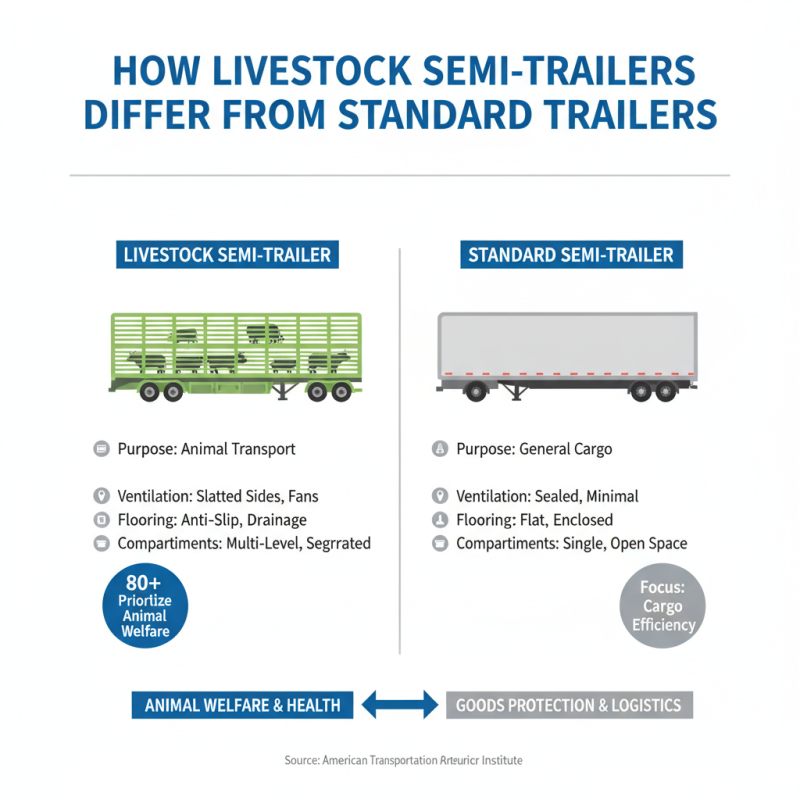
Livestock semi trailers are designed specifically for transporting animals, differing significantly from standard trailers. These trailers feature ventilation systems that ensure a comfortable environment for the livestock. According to the American Transportation Research Institute, over 80% of livestock carriers prioritize animal welfare during transport. This is crucial, as stress levels in animals can greatly impact their health.
Standard trailers often lack the specialized design needed for live haulage. Livestock trailers include sturdy, adjustable partitions. These partitions help secure the animals, preventing injury and minimizing stress. The surfaces are typically non-slip, reducing the risk of falls during transport. Studies show that maintaining a stable and comfortable environment can lower injury rates by up to 30% compared to regular trailers.
Tips: Always check the weight limits on your trailer. Overloading can lead to serious accidents. Regular maintenance of your livestock trailer is essential for safety and efficiency. Make sure ventilation systems are functional before each trip to ensure animal welfare.
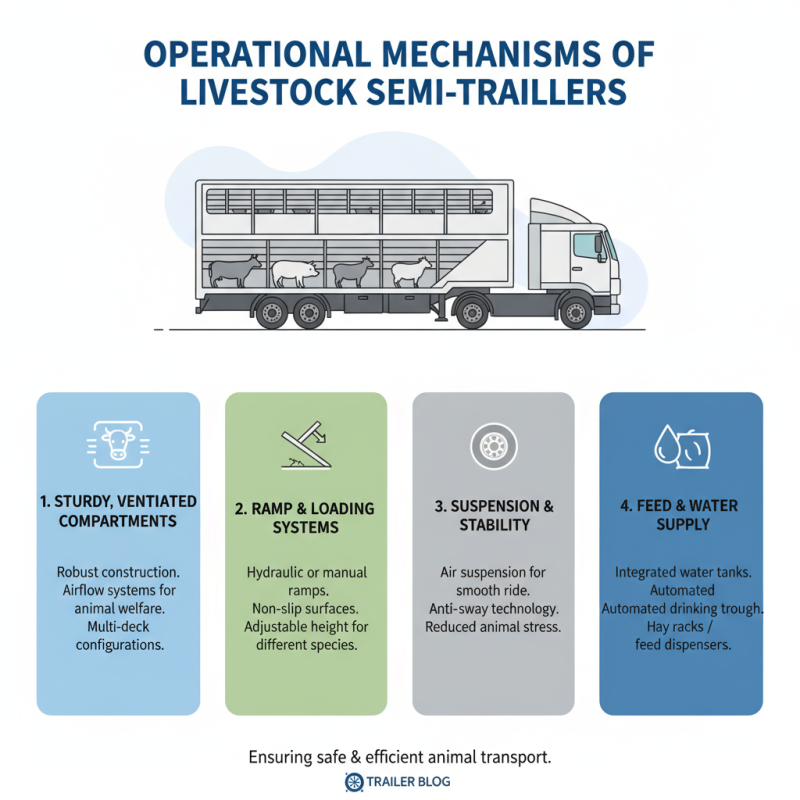
Operational Mechanisms of Livestock Semi Trailers
Livestock semi trailers are specialized vehicles designed to transport animals safely and efficiently. These trailers utilize a series of operational mechanisms that ensure both the comfort of the livestock and the safety of the driver. Each trailer typically features sturdy, well-ventilated compartments. This design is crucial for maintaining the welfare of the animals during transport.
The operational efficiency of these trailers relies heavily on a combination of hydraulic systems and ramps. These features aid in loading and unloading animals with minimal stress. Hydraulic lifts enable smooth adjustments, allowing for easy entry and exit for the livestock. Proper ramp angles are needed to ensure the safety of the animals as they board and leave the trailer. Without these considerations, the risk of injury increases significantly.
Yet, challenges remain in optimal trailer use. For instance, securing animals effectively while maintaining space is not always straightforward. Sometimes, space can be tight, leading to agitation among the livestock. This highlights the need for continuous improvements in design and operation protocols to better safeguard animal welfare during transport.
Safety and Welfare Considerations for Transporting Livestock
Transporting livestock requires careful planning and consideration of their safety and welfare. Livestock semi trailers are designed to create a secure environment for animals during transit. Proper ventilation is crucial. Insufficient airflow can lead to stress and discomfort. Animals should have enough space to stand naturally. Overcrowding can cause injuries and anxiety.
Temperature control is another important factor. Extreme heat or cold can be harmful to livestock. Drivers must monitor conditions and adjust as necessary. Frequent stops allow for checks on the animals' well-being. During these breaks, ensure they have access to water. Dehydration can occur quickly during transport.
Special handling may be necessary for different species. Cattle, sheep, and pigs all have unique needs. Understanding these differences is key to ensuring their welfare. Mistakes can happen. Rushing or lack of knowledge can lead to problems. Continuous education on best practices is essential for all involved in transporting livestock.